Your Donor Area Is a Budget You Spend Once: Understanding Limits
Every person considering a hair transplant in Turkey should understand the donor area is not an unlimited resource. Once hairs are taken, they do not grow back, making careful planning essential for a natural, lasting result.
This guide explains why the donor area acts as a lifelong hair budget, how to estimate your real graft supply, what overharvesting looks like, and why it’s impossible to undo. You’ll also see how beard and body hair can supplement—but not replace—scalp grafts, and how to approach clinics with the right questions.
What Is the Donor Area and Why Does It Matter?#
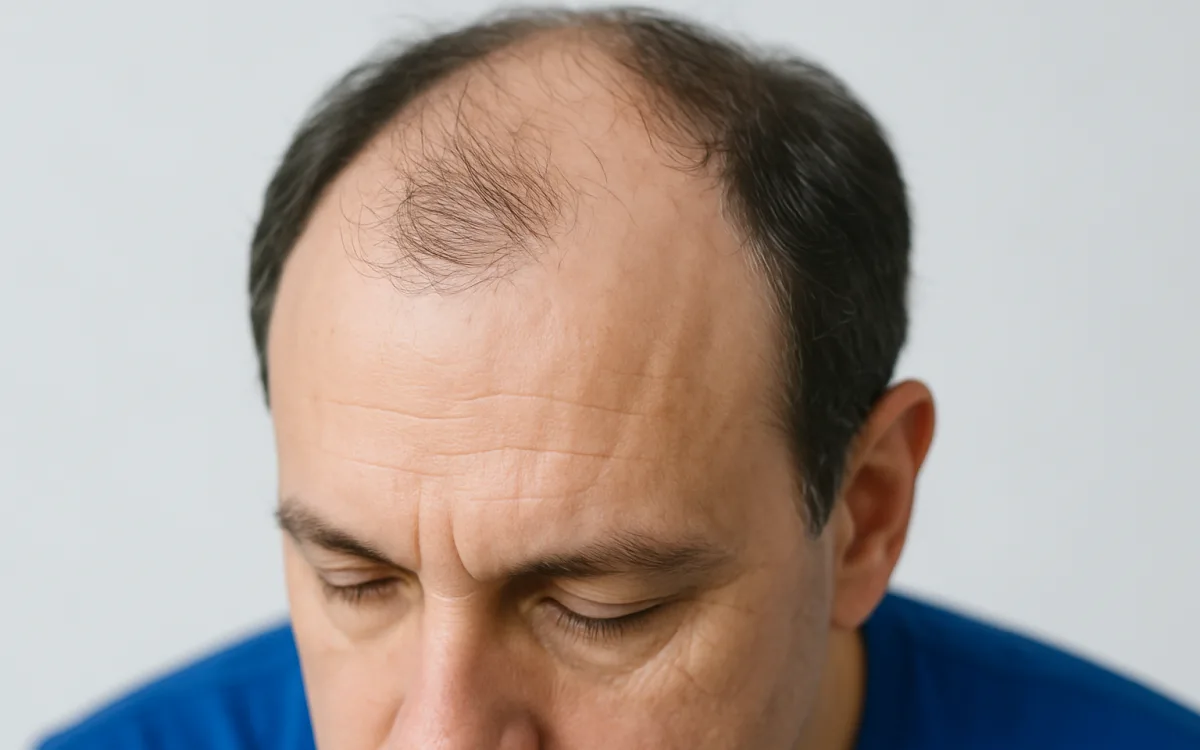
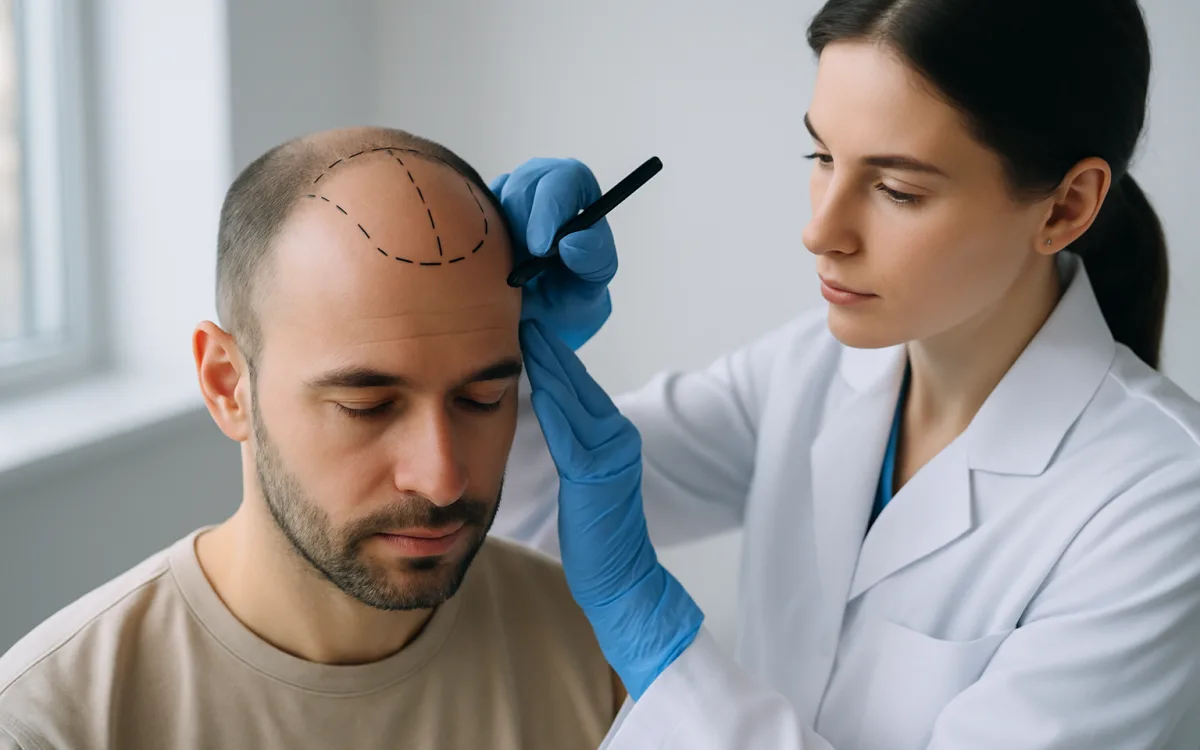
The donor area refers to the region at the back and sides of the scalp where hairs are genetically resistant to balding. These hairs are used as grafts in a hair transplant. In Turkey, as in any country, the size and density of your donor area set a hard upper limit on how much hair can be moved. Overestimating this supply leads to disappointment or visible thinning in the donor area itself. Your donor area is unique—mapping and measuring it is essential before planning any surgery. No reputable clinic should promise to cover extensive baldness without first assessing your donor capacity.
Safe Donor Zone: The True Source of Transplantable Hair#
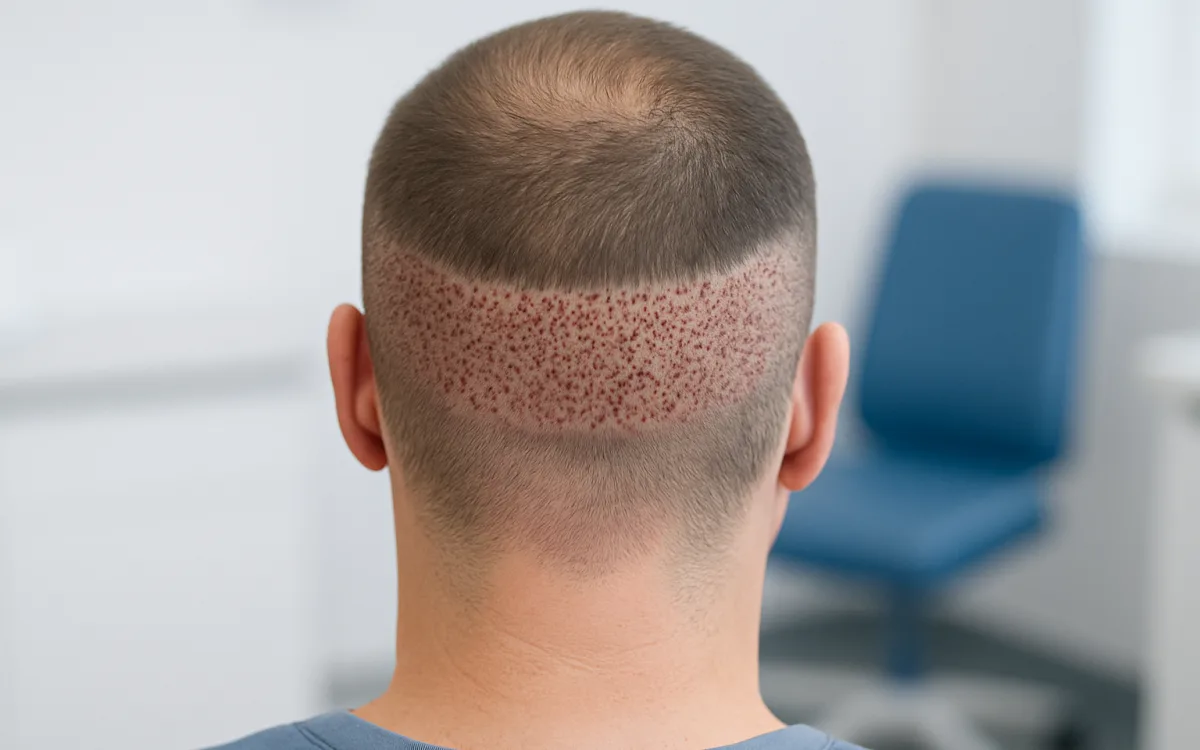
The so-called safe donor zone is the area most likely to retain hair for life, even in advanced male pattern baldness. Harvesting outside this zone risks moving hairs that may eventually fall out. Most people have a safe donor zone spanning 12–15 cm in height and 25–30 cm in width, but individual variation is significant. Only hairs within this zone should be considered for transplantation, which typically limits lifetime grafts to 4,000–7,000 for most men. Women and men with diffuse thinning often have even less.
| Donor Density (FU/cm²) | Safe Donor Area (cm²) | Estimated Lifetime Graft Capacity |
|---|---|---|
| 60 | 120 | 7,200 |
| 50 | 110 | 5,500 |
| 40 | 100 | 4,000 |
| 30 | 90 | 2,700 |
Actual usable grafts will be lower than theoretical totals due to surgical technique and the need to leave the donor area looking natural.
How to Tell If You’re at Risk of Overharvesting#
Overharvesting is the most common mistake in poorly planned hair transplants, especially where cost pressures push for maximal graft counts. Once too many follicles are removed, the resulting lack of density is impossible to reverse. This is why conservative planning and transparent graft estimates matter more than ambitious promises.
- Visible thinning or patchiness in the donor region after surgery
- Noticeable scars or lines, especially with older strip (FUT) methods
- A ‘moth-eaten’ appearance at the back or sides of the scalp
- Grafts taken above or below the safe zone leading to eventual loss
- Redness, pain or delayed healing in the donor area
Estimating Your Own Donor Capacity: Realistic Numbers#
A careful assessment starts with measuring donor density (typically 40–80 follicular units per cm²) and the size of your safe donor area. Most clinics in Turkey offer a free written assessment using photos or an in-person examination. Reliable clinics will refuse to extract more than 50% of your donor density to avoid visible thinning. For example, a man with 120 cm² of safe donor area and 60 FU/cm² has a theoretical maximum of 7,200 grafts, but a safe extraction would yield 3,600–4,000. Patients with low density, diffuse thinning, or scarring may have much less available.
Ask for a detailed donor area analysis, not just a headline graft number.
Supplementing Scalp Grafts: Beard and Body Hair Options#
When scalp donor supply is limited, some clinics in Turkey offer body or beard hair transplantation (BHT). Beard hair is often the preferred supplement due to its thickness. However, these hairs may not match scalp hair exactly in texture or growth cycle. Using them is a trade-off and should be considered only after a thorough discussion of risks and expectations with a qualified surgeon.
- Beard hair: Coarse, robust, can blend with scalp hair for added density
- Chest/torso hair: Finer, shorter growth phase, less reliable in the long term
- Success depends on your natural body hair density and characteristics
- Beard and body hair are never a first-line option and are best used for repair cases
- Extraction may leave visible marks or unevenness in beard or body areas
How to Choose a Clinic That Respects Donor Area Limits#
While Turkey offers excellent value for hair transplant surgery, standards vary widely. Independent platforms like this one can connect you with clinics that prioritise donor safety and ethical planning. Never commit to surgery based solely on price or maximum grafts. A reputable clinic will explain the limitations of your donor area and help you plan for both current and future hair needs.
- Check the clinic’s written policy on donor area assessment and maximum extraction
- Request before/after photos with a clear view of both recipient and donor areas
- Ask for a written quote with a breakdown of proposed graft numbers per area
- Choose clinics that offer follow-up and transparent complication rates
- Be sceptical of high-volume, low-cost offers promising 5,000+ grafts for all patients
Long-Term Planning: Avoiding Regret and Preserving Options#
Hair loss is progressive, and your donor area is finite. Overharvesting in your first surgery could leave you with no options for future touch-ups or repairs. It’s better to under-correct now and retain a reserve than to chase density at the expense of your donor area. Discuss with your clinic how your donor supply might serve you over a lifetime, not just today’s needs.
Questions people ask
How many grafts can be safely taken from my donor area?
The safe number of grafts depends on your donor density and the size of your safe zone. Most men can spare 3,000–4,500 grafts without visible thinning, but this varies widely. Exceeding 50% extraction risks overharvesting. A detailed measurement by a clinic is essential for an accurate estimate.
What happens if too many grafts are taken from the donor area?
Overharvesting leads to visible thinning, patchiness, and sometimes permanent scarring in the donor region. These effects are not reversible, and options for repair are limited. Always prioritise donor preservation over large graft numbers to maintain a natural look for life.
Can beard or body hair replace scalp donor hair in a hair transplant?
Beard and body hair can supplement but not fully replace scalp donor hair. Beard hair is thicker and may help with density, while body hair is finer and less predictable. These options are best for repair or when scalp supply is exhausted, and results may differ in texture and growth from native scalp hair.
hair transplant Turkeydonor area hair transplanthair transplant graft limitsoverharvesting hair transplantbeard hair transplant Turkeysafe donor zone hair transplant