FUE vs DHI Hair Transplants in Turkey: An Honest Technical Comparison
Choosing between FUE and DHI hair transplant techniques in Turkey can be confusing, especially with the marketing claims and varying prices. Both techniques extract grafts the same way, but differ at the implantation stage—something that impacts cost, recovery, and suitability.
This guide lays out the real technical differences, what the Choi implanter does in DHI, and when a hybrid approach is chosen. You'll find a side-by-side comparison, details on costs, and advice on what matters beyond the headlines—so you can make an informed decision before requesting a quote from a reputable clinic.
What Actually Separates FUE and DHI Techniques?#
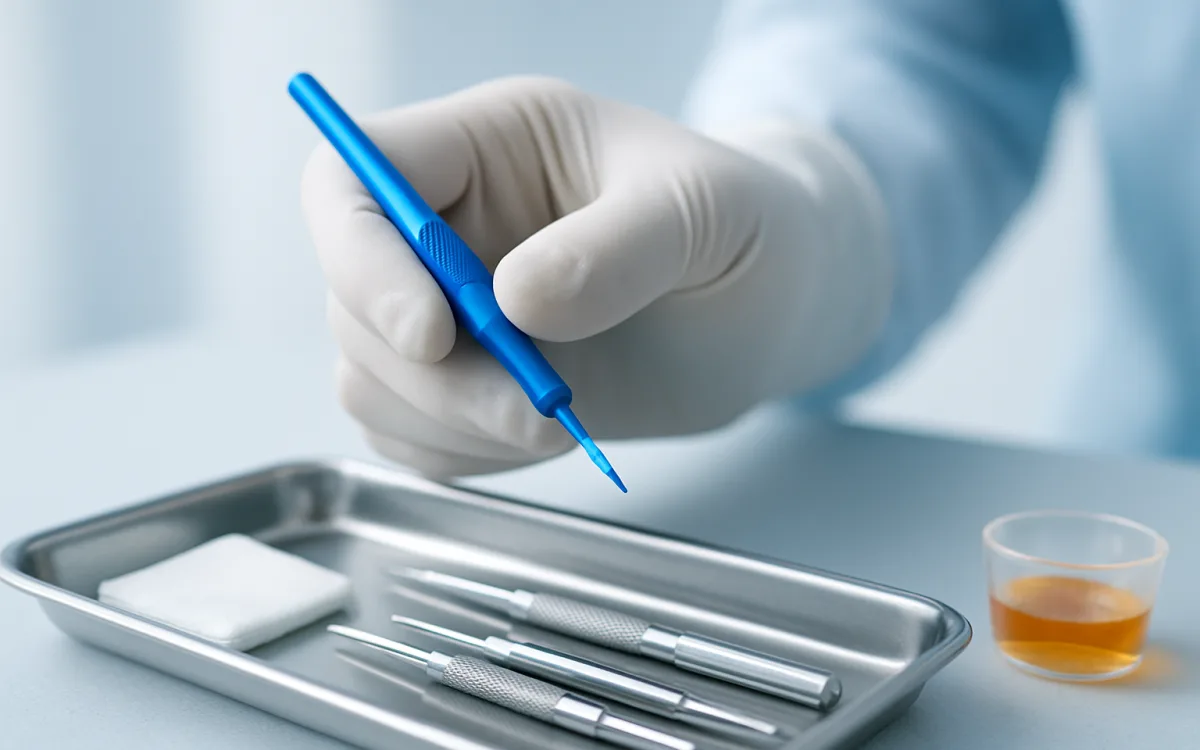
Follicular Unit Extraction (FUE) and Direct Hair Implantation (DHI) both start with extracting individual follicular units from the donor area, usually at the back or sides of the scalp. The genuine difference comes at the implantation step. In FUE, small channels are first created in the recipient area, and then grafts are placed into these incisions. In DHI, the surgeon uses a Choi implanter pen, which allows simultaneous channel creation and graft placement. This can mean less time the graft spends outside the scalp, but also requires more precision and specialist training. While both methods can achieve natural results in experienced hands, the real-world differences are more technical than most clinics’ marketing suggests.
Side-by-Side: FUE vs DHI at a Glance#
| Feature | FUE | DHI |
|---|---|---|
| Graft Extraction | Manual/motorised punch | Manual/motorised punch |
| Implantation | Forceps into pre-made channels | Choi implanter pen, simultaneous insertion |
| Graft Survival Time Outside Scalp | Typically 1–2 hours | Often under 1 hour |
| Team Requirement | 2–4 technicians | 3–6, including implanter specialists |
| Typical Cost per 1000 Grafts (€) | 1,500–2,200 | 2,100–3,000 |
| Maximum Grafts per Day | Up to 4,000 | Often 2,000–3,000 |
| Best For | Large areas, lower density | Small areas, high density, frontal hairline |
Why DHI Costs More: Staff, Tools, and Time#
DHI hair transplants in Turkey usually cost 30–50% more per graft than standard FUE. The main reasons are the cost of single-use implanter pens, the extra staff needed, and the longer time required for each procedure. Some clinics also position DHI as a luxury option, which can further drive up the price, even if the underlying technique does not guarantee a better result for everyone.
- Choi implanter pens are single-use or require meticulous sterilisation, adding cost.
- Implantation with the pen is slower and more labour-intensive, limiting daily graft numbers.
- DHI teams require more staff trained specifically in pen use.
- More time per patient means higher operational costs for the clinic.
- DHI is often marketed as premium, which may inflate prices beyond true material costs.
Is DHI Actually Better? What the Evidence and Experience Show#
While DHI’s marketing often claims less trauma and faster recovery, the published evidence does not consistently show a major difference in final hair density or growth rates when compared to FUE. DHI may allow for higher density in small areas (such as the hairline) due to the pen's precision, but it is not suitable for very large sessions or for patients with limited donor supply. Both FUE and DHI depend much more on the surgeon’s skill and the clinic's protocols than on the tool used for implantation. Patients should be wary of any promise that DHI is always 'better'—it is simply different, and only sometimes advantageous.
When Clinics Use a Hybrid Approach#
Some clinics offer a combination, using FUE for high-volume areas and DHI where precision matters—such as the front hairline or temple points. This hybrid approach can keep overall costs reasonable while benefiting from DHI’s strengths. However, not every patient is a good candidate for mixed techniques, especially if the donor area is limited or scalp laxity is an issue. Honest clinics will explain which parts of your plan, if any, might benefit from DHI, and what it adds to your quote.
Many reputable clinics in Turkey use FUE for the majority of the grafts and switch to DHI for the frontal line or crown detail, balancing cost, density, and safety.
Cost Breakdown: What to Expect in Turkey#
Prices for hair transplant Turkey packages vary depending on clinic reputation, surgeon experience, and case complexity. DHI is rarely priced below €2,000, even for small sessions, while large FUE cases can sometimes be found under €2,000. Always request an itemised quote and ask what is included—such as aftercare, medications, or accommodation—before making any commitment.
| Technique | Low-End Cost (€) | High-End Cost (€) |
|---|---|---|
| Standard FUE | 1,500 | 4,000 |
| DHI | 2,100 | 6,000 |
| Hybrid (FUE+DHI) | 1,800 | 5,200 |
How to Decide: Technical Needs vs. Marketing#
Choosing between FUE and DHI should be based on your scalp’s needs, your budget, and the skill of the surgical team—not just marketing claims. Both techniques have their place, and the best clinics in Turkey will customise the approach to your situation. Surgery is not always the answer: if you are under 25, have unstable hair loss, or unrealistic density goals, pausing for further assessment is often the safer path.
- Assess your hair loss stage and donor supply honestly before considering any technique.
- Ask clinics to explain why they recommend FUE, DHI, or a hybrid, not just the cost.
- Review before/after photos for similar cases, but never trust results as guaranteed.
- Consider recovery time and daily routine disruption: DHI may mean less scabbing, but not always.
- Be sceptical of any clinic that only offers one technique or makes sweeping promises.
Questions people ask
Is DHI less invasive than FUE for hair transplant Turkey procedures?
DHI uses a specialised implanter pen to place grafts, which can minimise the time each graft spends outside the body and may reduce trauma in dense or delicate areas. However, both DHI and FUE involve the same extraction method, and neither is truly 'non-invasive'. The real difference is in how the grafts are implanted, not how the donor hair is removed. Recovery and discomfort are similar for most patients, and the surgeon’s skill plays the biggest role in your experience.
Can I get the same number of grafts with DHI as with FUE in Turkey?
Generally, DHI sessions are limited to around 2,000–3,000 grafts per day, whereas FUE can sometimes reach up to 4,000 grafts if your donor area and scalp condition allow it. This is because DHI implantation is slower and technically demanding. For very large areas of hair loss, clinics may recommend FUE or a hybrid approach to achieve your goals in one session, but not all patients are suitable for high-graft-count procedures.
Why do some clinics in Turkey recommend a hybrid FUE+DHI approach?
A hybrid approach uses FUE for bulk grafting in larger, less visible areas and switches to DHI for the frontal hairline or areas needing high precision. This balances the cost, time, and outcome by using each method’s strengths. Not all patients require both techniques, and honest clinics will explain if a hybrid plan is appropriate for your case based on your hair loss pattern, donor supply, and density goals—not just to justify a higher price.
hair transplant TurkeyFUE vs DHI differenceDHI hair transplant cost TurkeyFUE hair transplant techniquebest hair transplant method Turkeyhybrid hair transplant Turkey