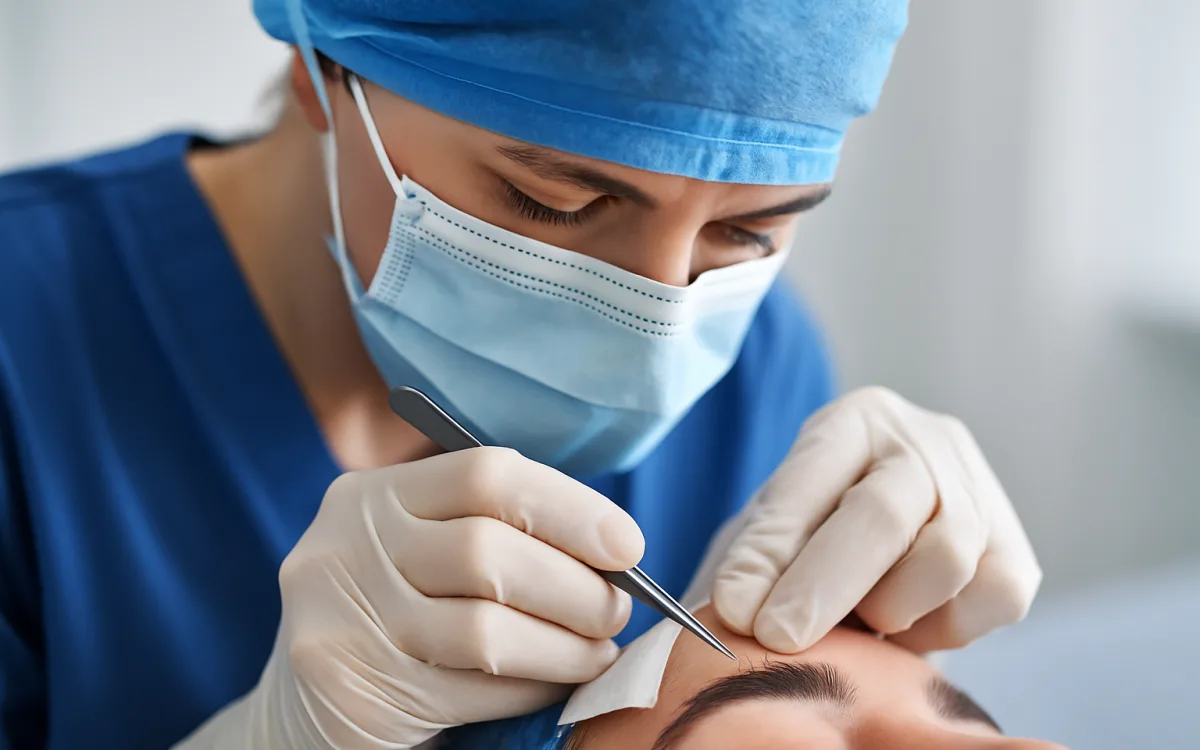
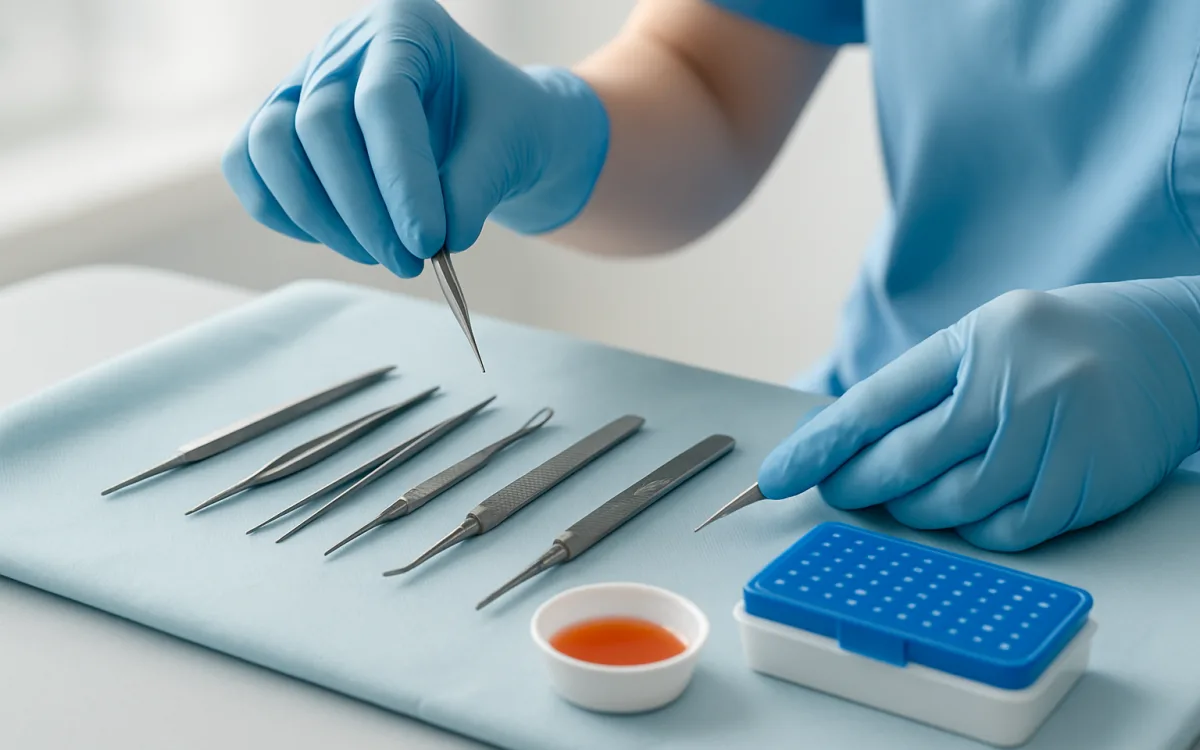
Sapphire FUE in Hair Transplant Turkey: The Blade, The Claims, The Facts
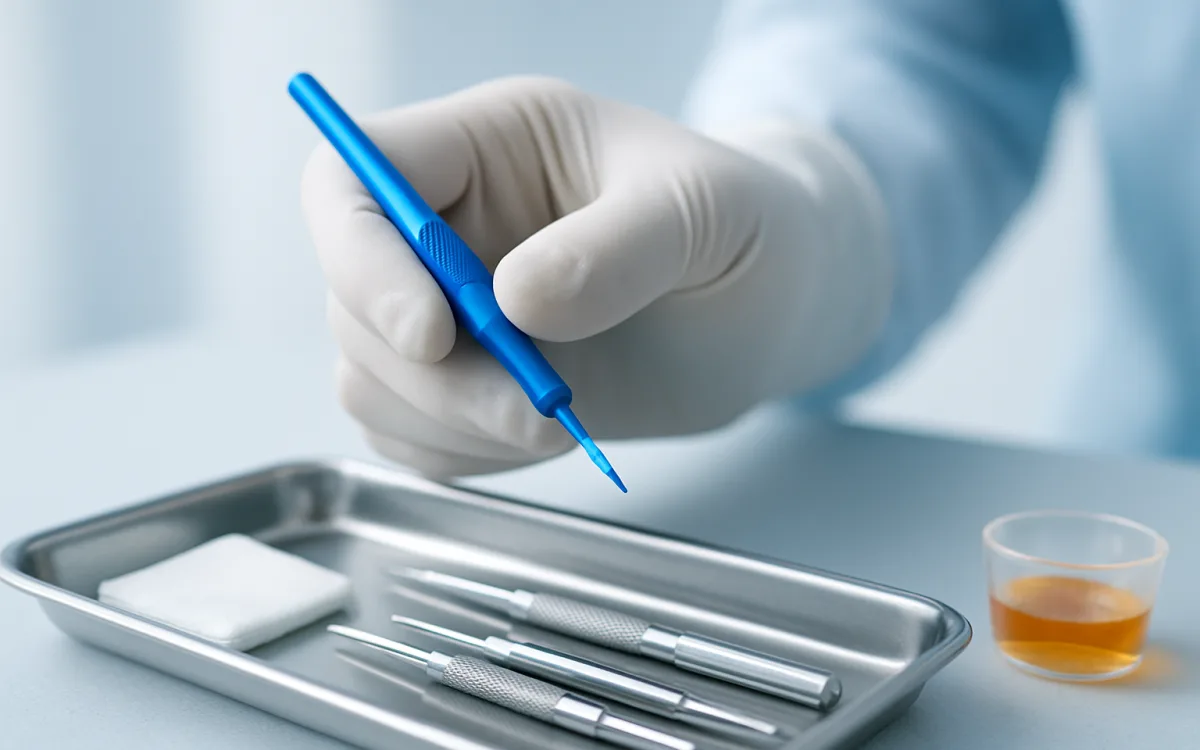
Sapphire FUE is widely promoted by clinics in Turkey as a cutting-edge option for hair transplant surgery, often at a higher price. But what exactly does a sapphire blade do that a traditional steel slit cannot?
This guide reviews the real differences, the clinical evidence behind claimed benefits, and how much a blade material can actually influence the outcome. If you’re considering a hair transplant in Turkey, understanding the role of tools like sapphire blades—versus the surgeon’s skill and your own hair characteristics—will help you make an informed, realistic decision.
What Is a Sapphire Blade and How Is It Used?#
In follicular unit extraction (FUE) hair transplant, the surgeon creates tiny incisions in the recipient area to place grafts. Traditionally, these incisions are made with fine steel blades or needles. Sapphire blades are not made of actual sapphire gemstones, but of synthetic sapphire—a hard, smooth, medical-grade material. The blade is shaped like a chisel or pen, and its sharp, smooth edge allows for precise, V-shaped incisions. In clinics across Turkey, the term “Sapphire FUE” refers to using this type of blade for the recipient site, not to a different extraction or implantation method. The extraction step itself is usually performed with a standard punch, regardless of blade material.
Sapphire blades are a tool for making recipient incisions, not a fundamentally different transplant technique.
Steel vs. Sapphire: What Really Differs?#
Clinics often highlight the sharpness and smoothness of sapphire blades as their main advantage. The V-shaped incisions are said to allow denser packing and minimal trauma to the tissue. In practice, both steel and sapphire can create very fine, precise slits when handled by an experienced surgeon. Sapphire blades may maintain their sharpness over more grafts, but this difference is subtle and often only apparent in large, high-density sessions.
| Feature | Steel Blade | Sapphire Blade |
|---|---|---|
| Edge Sharpness | Good, but dulls faster | Sharper, stays sharp longer |
| Incision Shape | Usually U-shaped | V-shaped, finer tip |
| Incision Size | 0.7–1.5 mm | 0.6–1.3 mm |
| Material | Surgical steel | Synthetic sapphire |
| Sterility | Single-use or autoclaved | Single-use, non-porous |
Examining the Claimed Benefits of Sapphire FUE#
Most published studies comparing recipient blade materials are small and short-term. Some suggest marginal improvements in healing time and post-op redness with sapphire, but these differences are often not significant at the one-year mark. Key variables like surgeon technique, patient health, and graft quality play a far greater role in the final result than the blade itself. Sapphire blades do not guarantee higher graft survival or a more natural look on their own.
- Reduced trauma to the scalp due to finer incisions
- Potential for greater graft density
- Faster healing and less post-op swelling
- Lower risk of scarring or pitting
If a clinic pushes sapphire FUE as a guarantee of better results, ask for published, peer-reviewed evidence—not just marketing claims.
Cost Differences: Why Is Sapphire FUE Priced Higher?#
Sapphire FUE is often marketed as a premium service, with clinics in Turkey charging €300–€600 more than for standard steel-blade FUE. The price difference reflects the cost of the disposable sapphire blades and sometimes the perceived prestige. However, the main cost drivers remain the number of grafts, the surgeon’s experience, and the clinic’s overall standards. Always request a detailed, written quote that lists what is included—and be wary of large price jumps that cannot be explained.
| Service | Estimated Cost (€) | Reason for Range |
|---|---|---|
| Standard Steel FUE | 1,500–2,200 | Depends on graft number, clinic reputation |
| Sapphire FUE | 1,800–2,800 | Premium for blade; surgeon experience |
| Direct Hair Implantation (DHI) | 2,200–3,300 | Implantation pen, extra staff, session length |
Does Sapphire Blade Choice Affect Graft Survival?#
There is no strong scientific evidence that using a sapphire blade alone increases graft survival rates over steel blades. Both blade types can create suitable incisions for healthy grafts if handled correctly. Factors that most affect graft survival include how long the grafts are out of the body, how they are handled, and how precisely they are implanted. If you are considering a hair transplant in Turkey, focus on the clinic’s protocols for graft extraction, storage, and placement, not just the blade material.
- Minimise graft out-of-body time
- Avoid excessive force or trauma during insertion
- Ensure proper graft hydration
- Choose an experienced surgical team
Who Is (and Isn’t) a Good Candidate for Sapphire FUE?#
Not everyone seeking a hair transplant in Turkey will benefit from sapphire blades. Patients with minimal hair loss or very tight, fibrous scalps may see little added value. If you have extensive baldness, your donor area’s limits—not the incision tool—will define your outcome. Those with certain scalp or skin conditions, or who have unrealistic expectations about density, may not be good candidates for any surgical hair restoration. Consider a proper assessment and talk honestly with potential clinics before committing.
Surgery may be premature if your hair loss is still progressing rapidly or if you are under 25.
How to Choose a Clinic: Beyond Blade Materials#
The blade material is just one detail in a complex process. A reputable clinic in Turkey should be transparent about their methods, offer written quotes, and never rush you into surgery. Focus on the surgical team’s skill, safety protocols, and honest communication. Remember, the best clinic for your hair transplant is not always the one offering the newest tool or the lowest price.
- Check the surgeon’s credentials and years of FUE experience
- Request to see a portfolio of real, healed cases—not just immediately post-op photos
- Ask about team involvement: who makes the incisions, who places the grafts
- Clarify what is included in the price (medications, aftercare, accommodation)
- Look for independent reviews and speak to previous patients if possible
Questions people ask
Do sapphire blades guarantee a better hair transplant result?
No, sapphire blades do not guarantee a better result. While they may allow for finer, denser incisions and potentially reduced healing time, the final outcome depends far more on the surgeon’s experience, your donor hair quality, and proper surgical protocols. There is no strong evidence that blade material alone determines graft survival or naturalness. Focus on overall clinic standards rather than a single tool.
Why are sapphire FUE procedures more expensive in Turkey?
Sapphire FUE generally costs €300–€600 more than standard steel-blade FUE in Turkey. This premium reflects the price of disposable sapphire blades and, sometimes, the perceived prestige of newer technology. However, the real cost drivers are the number of grafts, the surgical team’s experience, and the clinic’s reputation. Always ask for a detailed, written quote to understand exactly what is included in the price.
Is sapphire FUE suitable if I am still losing my hair?
If your hair loss is still progressing rapidly—especially if you are under 25—surgery of any kind may be premature. Sapphire FUE does not prevent further hair loss or guarantee dense, stable results in this scenario. Proper timing, realistic planning, and medical management of hair loss are crucial before considering surgery. A responsible clinic should assess your suitability honestly and may recommend waiting or starting with medical treatments first.
hair transplant TurkeySapphire FUE vs steel FUESapphire blade hair transplantFUE recipient incision toolsBest clinics for Sapphire FUEHair transplant cost Turkey