Male Pattern Hair Loss: Causes, Speed, and What It Means for Surgery
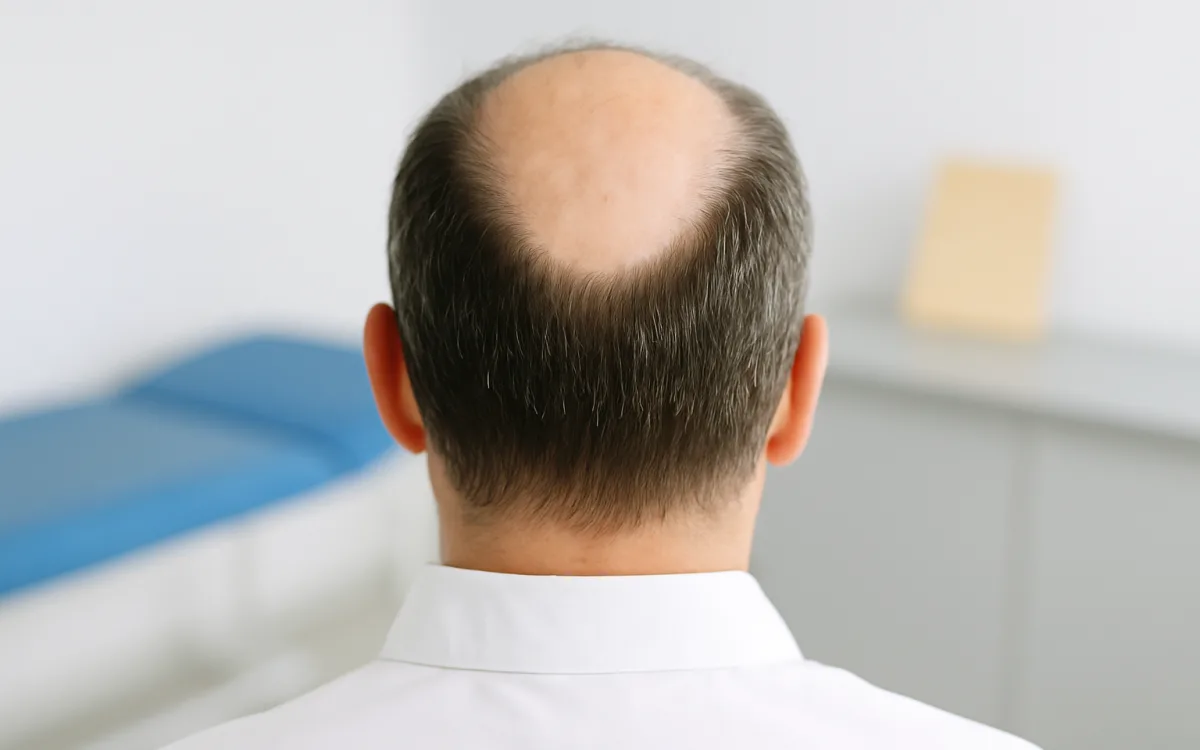
Male pattern hair loss, or androgenetic alopecia, is the most common cause of hair thinning in men and often leads to questions about prevention, timing, and treatment options. Understanding why it happens, how quickly it progresses, and what science says about donor hair can help you make informed decisions—especially if you’re considering a hair transplant in Turkey.
This guide breaks down the biology in plain English, explains why the back of your head is often spared, and shows what factors influence how fast you lose hair. It also covers what this means for surgery planning, including whether you might not be ready—or not a good candidate at all.
What Is Male Pattern Hair Loss and Why Does It Happen?#
Male pattern hair loss is a genetic condition driven mainly by a hormone called dihydrotestosterone (DHT). Hair follicles on the top and front of the scalp are sensitive to DHT, which gradually miniaturises them—meaning each cycle, the hair grows back thinner and shorter until it stops altogether. This is why you see the classic receding hairline and thinning crown. The tendency to lose hair, as well as the age at which it starts and how quickly it progresses, is inherited. While some men begin noticing thinning in their late teens or early 20s, others maintain a full head of hair for decades longer.
DHT and Follicle Miniaturisation: The Science in Plain Language#
DHT is a by-product of testosterone, made by the enzyme 5-alpha reductase. In genetically predisposed men, DHT binds to hair follicles on the scalp, causing them to shrink over time. This process is called miniaturisation. The hair’s growing phase (anagen) shortens, while the resting phase (telogen) lengthens, leading to finer, shorter hairs. Eventually, these follicles stop producing visible hairs altogether. Importantly, follicles on the sides and back of the head are resistant to DHT. That’s why these areas are usually spared—and why they’re used as donor zones in hair transplant Turkey procedures.
DHT sensitivity is inherited, so even with healthy habits, you cannot fully prevent male pattern hair loss if you have the genetic predisposition.
Why the Donor Area Is ‘Permanent’—But Not Unlimited#
The term ‘permanent’ donor area refers to the horseshoe-shaped band of hair around the back and sides of your scalp. These follicles are genetically resistant to DHT, so they generally keep growing even when the top thins. In hair transplant Turkey operations, surgeons harvest grafts from this zone for implantation. However, ‘permanent’ doesn’t mean infinite: the safe donor area contains around 4,000–7,000 usable grafts for most men, and overharvesting can thin this area visibly. Also, age, genetics, and certain medical conditions can still affect donor hair over time.
- Donor hair is more resistant, not truly immune, to loss.
- The donor area has a finite number of grafts—usually 4,000–7,000.
- Overharvesting can create visible thinning or scars.
- Results depend on the skill of the surgeon and the quality of your donor hair.
- Medical conditions or scarring can reduce donor hair quality.
What Affects the Speed of Hair Loss—and What Does Not#
| Factor | Affects Speed? | Notes |
|---|---|---|
| Genetics (family history) | Yes | Main predictor of onset and progression. |
| Age at onset | Yes | Earlier start means higher risk of severe loss. |
| DHT levels | Yes | More DHT or higher sensitivity speeds up loss. |
| Stress | No | Can cause shedding, but not true pattern loss. |
| Diet | No | Poor nutrition weakens hair, but doesn’t cause pattern loss. |
| Shampoo or hair products | No | Do not affect the underlying biology. |
If you notice rapid, patchy, or unusual hair loss, seek medical advice—this may not be male pattern baldness.
How Age at Onset Predicts Severity#
The earlier you notice hairline recession or thinning, the more likely you are to develop extensive baldness as you age. Men who start losing hair in their late teens or early 20s often progress to Norwood stage 5–7 (advanced loss) by their 40s. Conversely, if you only start thinning after 40, the loss is likely to be gradual and less severe. This matters for planning a hair transplant in Turkey: operating too early can mean you’ll need further surgery as loss continues, and donor grafts are finite. Sometimes the best option is to wait, especially if you’re under 25 or your pattern is still changing.
- Early onset predicts more severe, extensive baldness.
- Late onset generally means milder progression.
- Transplanting too early risks an unnatural look as loss continues.
- Younger men may need more than one surgery over time.
When Is Hair Transplant Surgery Premature or Not Advised?#
Not everyone is a good candidate for hair transplant surgery. If your hair loss is still progressing rapidly, or you are under 25, most reputable clinics in Turkey will advise waiting. Surgery is also not suitable if you lack enough healthy donor hair, have certain scalp diseases, or unrealistic expectations. Some men’s hair loss patterns are too unpredictable for surgery to create a lasting, natural result. Before committing, check whether your hair loss has stabilised and discuss non-surgical treatments with your doctor. An honest assessment is crucial for satisfaction and avoiding disappointment.
| Situation | Is Surgery Advised? | Why/Why Not |
|---|---|---|
| Under age 25 and rapid loss | No | Pattern not stable; high risk of future loss. |
| Limited donor hair | No | Not enough grafts for coverage. |
| Stable loss, good donor area | Yes | Best scenario for surgery. |
| Scalp disease or scarring | No | Risk of poor healing or failure. |
| Unrealistic expectations | No | Surgery cannot deliver full density or a teenage hairline. |
How This Affects Planning for Hair Transplant Turkey#
Understanding your own pattern and speed of hair loss is the first step before considering a hair transplant in Turkey. An honest estimate of your donor area, future loss, and expectations will help you avoid disappointment, unnecessary procedures, and wasted money. Many clinics in Turkey offer free written quotes, but be wary of any that guarantee results or push you into surgery if you are young or your hair loss is unstable. Use independent information and referral platforms to compare clinics and get a realistic sense of your options. Remember: surgery is a tool, not a cure.
Questions people ask
Why is the back of my head less likely to go bald?
The hair follicles at the back and sides of the scalp are genetically resistant to DHT, the hormone responsible for male pattern hair loss. This means they usually retain their thickness and continue to grow even when the top and front thin out. That’s why these areas are used as donor zones for hair transplant Turkey procedures. However, ‘permanent’ does not mean immune; age, genetics, or certain conditions can still affect these hairs over time.
How fast can male pattern hair loss progress?
The speed of male pattern hair loss varies widely. Some men lose significant hair within a few years of onset, especially if they start young, while others may see gradual thinning over decades. Genetics, age at onset, and DHT sensitivity are the main drivers. Rapid, patchy, or unusual hair loss may point to a different issue and should be checked by a doctor. In general, the earlier it starts, the more extensive it is likely to become.
Is there a perfect age for hair transplant in Turkey?
There isn’t a universal ‘perfect’ age. The best time for hair transplant surgery is when your hair loss has stabilised and you have a realistic expectation of future loss and donor area limits. For many men, this is after age 25, once the pattern is clearer. Surgery performed too early, especially in very young men, risks an unnatural look as more hair is lost over time. Always seek an honest assessment and avoid clinics that promise guaranteed results or push early intervention.
hair transplant Turkeymale pattern hair loss causesDHT and hair lossdonor area hair transplanthow fast does hair loss progresswhen to get hair transplant